
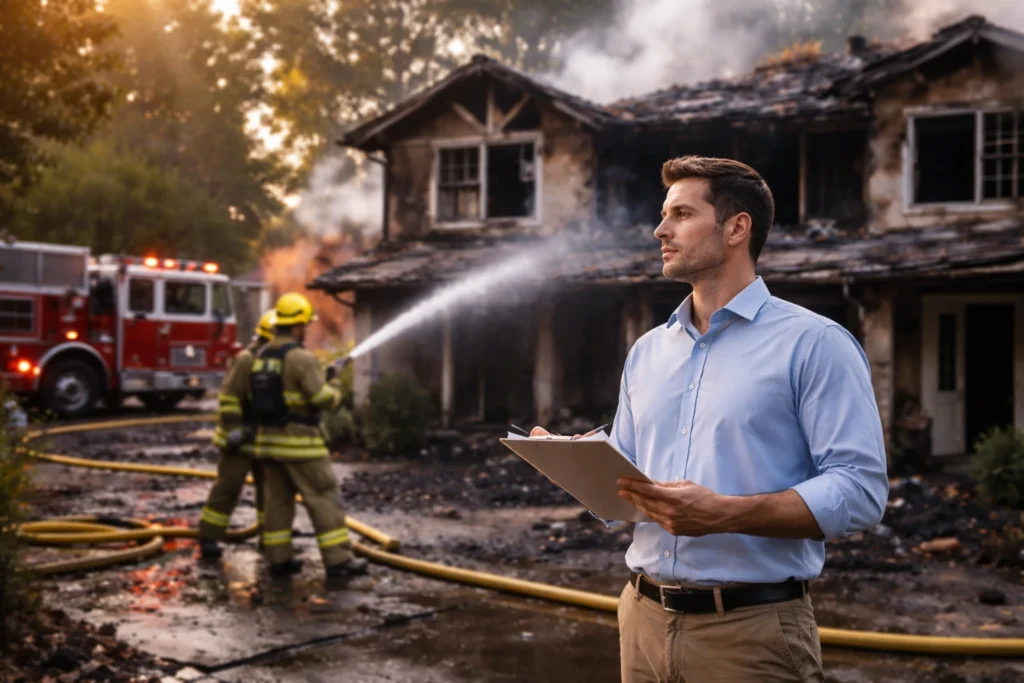
The flames are out. The trucks are gone. The silence feels heavy.
And that’s when the real work begins.
If you’ve just experienced a property fire, the insurance process is about to become your second full-time job. This is exactly where a fire damage public adjuster steps in — not as a contractor, not as a lawyer, and definitely not as someone working for the insurance company. They work for you.
In Nacogdoches, where historic homes, small businesses, and family properties are part of the community fabric, a fire loss isn’t just structural damage. It’s personal. And navigating a fire claim without expert representation can cost you more than you realize.
Let’s break down exactly why hiring a fire damage public adjuster matters — and how to protect your financial recovery from day one.
After the Flames: What Really Happens Next
Most people assume insurance takes care of everything. That’s not how it works.
Once a fire is reported:
- An insurance company adjuster is assigned.
- A preliminary inspection is performed.
- A scope of damage is created.
- An initial estimate is prepared.
- A settlement offer may follow.
Sounds straightforward. It’s not.
The insurance company adjuster represents the carrier’s interests. Their job is to evaluate the claim within policy terms and company guidelines. That doesn’t make them dishonest. It simply means they are not your advocate.
A fire damage public adjuster, on the other hand, represents the policyholder. Their job is to document every covered loss, interpret the policy in your favor where appropriate, and negotiate the maximum legitimate settlement available under your coverage.
That distinction changes everything.
What a Fire Damage Public Adjuster Actually Does
Let’s get specific.
A fire damage public adjuster doesn’t just “look at the damage.” They build the claim.
Here’s what that typically includes:
- Full policy analysis
- Line-by-line damage documentation
- Code compliance review
- Smoke and soot impact evaluation
- Contents inventory development
- Estimate preparation using industry-standard software
- Negotiation with the carrier
They don’t guess. They document.
And documentation wins claims.
The Hidden Complexities of Fire Claims
Fire damage is rarely just “burned wood.”
It’s layered.
1. Structural Damage
Obvious charred framing. Roof collapse. Damaged drywall. These are visible and usually addressed quickly.
2. Smoke Damage
Smoke travels. It seeps into insulation. It contaminates HVAC systems. And it penetrates porous materials. Even areas untouched by flames may require remediation.
3. Soot Contamination
Different materials burn differently. Plastic produces acidic soot. Wood produces a different residue. That residue can permanently damage surfaces if not handled properly.
4. Water Damage
Firefighters save your property — but water saturation can introduce mold risks, subfloor swelling, and electrical hazards.
5. Code Upgrades
Older properties in Nacogdoches may not meet current building codes. When rebuilding, upgrades may be required. If your policy includes ordinance and law coverage, those costs could be covered — but only if properly presented.
Without a fire damage public adjuster carefully evaluating these layers, entire portions of loss can be overlooked.
How a Fire Damage Public Adjuster Handles the Claim (Step-by-Step)
Let’s simplify the process:
| Phase | What Happens | Why It Matters |
| Initial Inspection | Comprehensive site evaluation | Prevents missed damage |
| Policy Review | Detailed coverage breakdown | Identifies hidden benefits |
| Damage Documentation | Room-by-room line item scope | Maximizes accuracy |
| Estimate Preparation | Industry-standard pricing software | Creates negotiation leverage |
| Negotiation | Back-and-forth with carrier | Drives higher settlement |
| Settlement Review | Final analysis before acceptance | Protects you from shortfalls |
This isn’t theoretical. It’s systematic.
And systems create better financial outcomes.
Common Mistakes Property Owners Make
In the chaos following a fire, decisions are rushed. That’s understandable. But mistakes can be expensive.
Here are the most common ones I see:
- Accepting the first offer without review
- Throwing away damaged contents too early
- Failing to photograph every room before cleanup
- Signing repair contracts before understanding claim scope
- Overlooking smoke damage in “unaffected” rooms
- Missing policy deadlines
A fire damage public adjuster prevents these errors by managing the claim proactively instead of reactively.
Why Early Representation Is Critical
Timing matters.
The earlier a fire damage public adjuster is involved, the stronger the claim foundation becomes.
Why?
Because:
- Evidence is preserved before demolition.
- Damaged materials are documented before disposal.
- Scope disagreements are addressed early.
- Temporary repairs are coordinated strategically.
- Communication with the carrier stays organized.
Once debris is removed and rebuilding begins, leverage decreases.
Early involvement equals stronger negotiating power.
Residential vs. Commercial Fire Claims
Fire claims differ dramatically depending on the property type.
For Homeowners
Coverage often includes:
- Dwelling (structure)
- Personal property (contents)
- Additional Living Expenses (hotel, rent, meals)
- Debris removal
The contents inventory alone can overwhelm families. Thousands of items must be listed, described, and valued.
A fire damage public adjuster helps build a structured, defensible inventory that reflects true replacement cost.
For Business Owners
Commercial fire claims are far more complex.
Coverage may include:
- Building loss
- Equipment damage
- Inventory loss
- Business interruption
- Extra expense coverage
- Loss of rents
Business interruption is particularly critical. Revenue loss must be calculated using historical financials, projected trends, and operational impact.
One small documentation error can reduce payout significantly.
Professional claim management is not optional here. It’s strategic.
Smoke and Soot: The Silent Financial Drain
Smoke damage is underestimated constantly.
Here’s why it matters:
- Smoke can corrode electronics.
- It embeds in upholstery.
- It damages insulation.
- It leaves persistent odor.
- It can require full HVAC system cleaning or replacement.
If smoke remediation is under-scoped, odor issues can resurface months later.
That’s why a fire damage public adjuster evaluates:
- Air quality impact
- Cleaning vs. replacement feasibility
- Duct system contamination
- Structural sealing requirements
Cutting corners on smoke remediation leads to future repair costs — often out-of-pocket.
Understanding How Settlement Amounts Are Calculated
Insurance payouts aren’t random. They’re formula-driven.
Key terms include:
Replacement Cost Value (RCV)
The cost to replace with new materials of like kind and quality.
Actual Cash Value (ACV)
Replacement cost minus depreciation.
Depreciation Holdback
Amount withheld until repairs are completed.
Ordinance and Law Coverage
Pays for code-required upgrades.
A fire damage public adjuster ensures these calculations are accurate and fully supported.
If depreciation is overstated or materials are underpriced, settlement suffers.
Precision matters.
When Is the Right Time to Hire a Fire Damage Public Adjuster?
Three ideal moments:
- Immediately after the fire
- After receiving a low settlement offer
- When disputes arise over scope or pricing
Even if you’ve already started the claim process, representation can still make a difference.
It’s rarely “too late.” But earlier is better.
What to Look for in a Fire Damage Public Adjuster in Nacogdoches
Not all adjusters specialize in fire losses.
When evaluating representation, consider:
- Texas licensing verification
- Specific fire claim experience
- Familiarity with local building codes
- Transparent fee structure
- Clear documentation process
- Willingness to explain the policy line-by-line
You want someone methodical. Organized. Calm under pressure.
Because fire claims are emotional. Representation should not be.
The Long-Term Financial Impact
Here’s the reality.
Fire losses are often underpaid when handled without professional representation. Not because of bad intent. Because of missed detail.
Small differences in:
- Material grade
- Square footage calculations
- Code upgrades
- Smoke remediation scope
- Business income projections
…add up quickly.
Over the life of a claim, those “small” gaps can mean tens of thousands of dollars.
A fire damage public adjuster protects against that erosion.
And when rebuilding costs are rising, protection matters more than ever.
A Final Perspective
After a fire, you are dealing with stress, displacement, contractors, and family disruption.
You shouldn’t also have to become an insurance claims expert overnight.
That’s why a fire damage public adjuster exists.
- They level the playing field.
- They bring structure to chaos.
- They replace uncertainty with documentation.
- They negotiate with confidence.
And most importantly — they protect your financial recovery.
If you’re facing a fire loss in Nacogdoches, don’t assume the process will “work itself out.” It rarely does.
Be proactive.
Get clarity early.
Build the claim correctly from the start.
Because when everything feels uncertain, one thing should not be — your settlement.