
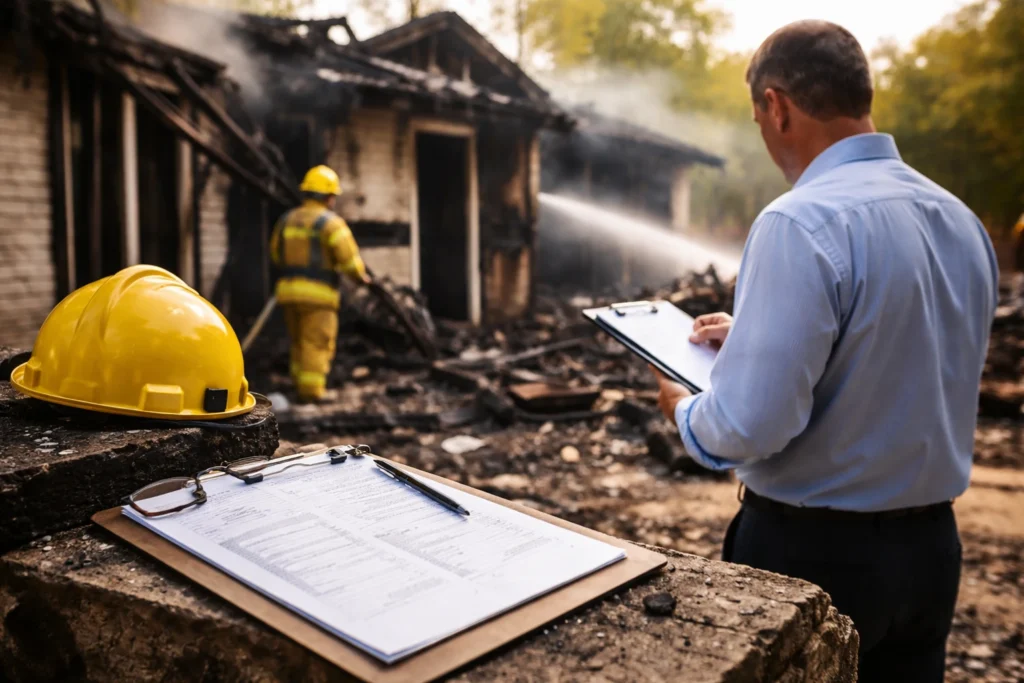
A house fire doesn’t just damage property. It disrupts your entire life. One moment you’re safe, and the next you’re dealing with smoke, ash, and uncertainty. In that moment, one decision can shape everything that follows whether or not you work with a fire insurance adjuster. I’ve seen homeowners try to handle claims on their own. It sounds simple at first. Call the insurance company. File a claim. Wait for payment. But it rarely works out that cleanly.
Insurance claims after a fire are complex. Emotions run high. Details get missed. And that’s exactly where a fire insurance adjuster steps in to protect your interests, not the insurance company’s. If you’re in Nacogdoches, this guide will walk you through exactly how it works and how to make sure you don’t leave money on the table.
What Is a Fire Insurance Adjuster?
Definition and Core Responsibilities
A fire insurance adjuster is a professional who evaluates fire damage, interprets your insurance policy, and helps determine how much you should be paid. But here’s the real distinction.
Some adjusters work for the insurance company. Others work for you. A public fire insurance adjuster represents the homeowner. That means their goal is simple: maximize your claim and make sure nothing gets overlooked. They don’t just inspect damage. They build your case.
Types of Adjusters You May Encounter
Understanding who you’re dealing with is critical.
| Type of Adjuster | Who They Work For | Goal |
| Company Adjuster | Insurance company | Minimize payout |
| Independent Adjuster | Insurance company (contract) | Process claims efficiently |
| Public Adjuster | You (policyholder) | Maximize your settlement |
If you remember nothing else, remember this: not all adjusters are on your side.
Why Hiring a Fire Insurance Adjuster Matters
Leveling the Playing Field
Insurance companies handle claims every day. Most homeowners don’t. That gap matters. A lot. Policies are written in dense language. Estimates can vary wildly. And unless you know what to look for, it’s easy to accept less than you deserve. A fire insurance adjuster evens things out. They understand the system and how to work within it.
Maximizing Your Settlement
Fire damage goes far beyond what you see.
- Smoke travels through walls
- Heat weakens structural elements
- Water from firefighting causes hidden issues
A skilled adjuster documents everything. Not just obvious damage. Everything. And that can dramatically increase your final payout.
Reducing Stress During a Difficult Time
Let’s be honest. After a fire, you’re not in the best position to argue with an insurance company. You’re dealing with displacement. Emotional stress. Possibly temporary housing. A fire insurance adjuster takes over the heavy lifting so you can focus on rebuilding your life.
What Does a Fire Insurance Adjuster Actually Do?
Damage Assessment and Documentation
This is where it starts.
A thorough inspection includes:
- Structural damage
- Smoke and soot contamination
- Water damage from firefighting efforts
- Personal property loss
Every item is documented. Every detail matters.
Policy Review and Claim Strategy
Insurance policies are not written for easy reading.
A fire insurance adjuster breaks it down:
- What’s covered
- What’s excluded
- Where you may have additional benefits
Even something like additional living expenses can be overlooked if you’re not careful.
Negotiation With Insurance Companies
This is where real value shows up. Adjusters present detailed reports. They challenge low estimates. They push back when necessary. And yes, they negotiate aggressively.
Claim Management From Start to Finish
From filing paperwork to tracking deadlines, a fire insurance adjuster keeps everything moving. No missed forms. No forgotten steps. No unnecessary delays.
The Fire Insurance Claim Process Explained
Let’s break it down.
Step-by-Step Overview
| Step | What Happens | Key Action |
| 1 | Emergency response | Secure property and notify insurer |
| 2 | Initial inspection | Insurance adjuster evaluates damage |
| 3 | Documentation | Inventory and estimate losses |
| 4 | Negotiation | Back-and-forth on settlement |
| 5 | Resolution | Payment issued and repairs begin |
Where Most Homeowners Struggle
- Underestimating total damage
- Missing documentation
- Accepting first offers too quickly
This is where a fire insurance adjuster becomes invaluable.
Common Challenges in Fire Insurance Claims
Underpaid or Denied Claims
It happens more often than you’d think. Sometimes it’s due to incomplete documentation. Other times it’s interpretation of policy language. Either way, it costs you money.
Hidden Damage
Smoke damage alone can affect:
- HVAC systems
- Electrical wiring
- Insulation
If it’s not documented, it’s not paid.
Complex Policy Language
Insurance policies often rely on principles similar to Bayes’ theorem where outcomes depend heavily on how information is interpreted and presented. In claims, the details you include can significantly influence the final result. That’s where expertise matters.
Delays in Processing
Delays can stretch for weeks or even months. And during that time, you’re waiting. Spending. Stressing. A fire insurance adjuster keeps pressure on the process.
When Should You Hire a Fire Insurance Adjuster?
Immediately After the Fire
The earlier you involve a fire insurance adjuster, the better your outcome tends to be. They can guide documentation from day one.
When Your Claim Is Large or Complex
If there’s major structural damage, multiple rooms affected, or total loss don’t go it alone.
If You Receive a Low Offer
Lowball offers happen.
A fire insurance adjuster can reassess and renegotiate.
If Your Claim Has Been Denied
Denied doesn’t always mean final. Many claims can be reopened with proper documentation and strategy.
How to Choose the Right Fire Insurance Adjuster in Nacogdoches
Key Factors to Consider
- Licensing and credentials
- Experience with fire claims
- Clear fee structure
- Strong communication
Why Local Experience Matters
Nacogdoches has unique housing characteristics. Older homes. Specific building materials. Regional risks. A local fire insurance adjuster understands these nuances.
Costs of Hiring a Fire Insurance Adjuster
How They Get Paid
Most public adjusters work on contingency.
That means:
- No upfront fees
- Paid as a percentage of your settlement
Why It’s Worth It
If your claim increases significantly, the adjuster’s fee often becomes a small price for a much larger payout.
Fire Damage in Nacogdoches – Local Considerations
East Texas homes face specific risks:
- Electrical fires in older structures
- Kitchen-related incidents
- Seasonal weather contributing to hazards
Fast response is critical. So is proper documentation.
Tips to Strengthen Your Fire Insurance Claim
Here’s where you can take control.
Actionable Steps
- Take photos and videos immediately
- Keep receipts for all expenses
- Document every conversation
- Don’t throw away damaged items
- Contact a fire insurance adjuster early
Simple Checklist
| Task | Why It Matters |
| Photograph damage | Proof for claim |
| Save receipts | Reimbursement |
| List damaged items | Accurate valuation |
| Review policy | Understand coverage |
Why Work With Nacogdoches Public Adjuster
Local expertise. Personalized service. Strong advocacy. A dedicated fire insurance adjuster doesn’t just process claims they fight for fair outcomes. And that makes all the difference.
Conclusion Take Control of Your Fire Insurance Claim
A fire changes everything. But your recovery doesn’t have to be chaotic. With the right approach and the right fire insurance adjuster you can take control of the process, avoid costly mistakes, and secure the settlement you truly deserve. Act early. Document everything. And don’t go it alone. That’s how you protect your home, your finances, and your future.
FAQs
A fire insurance adjuster evaluates fire damage, reviews your policy, and helps determine how much compensation you should receive.
You’re not required to hire one, but having a fire insurance adjuster can significantly improve your chances of receiving a higher settlement.
A public adjuster works for you, while a company adjuster works for the insurance provider and aims to limit payouts.
Most public adjusters work on a contingency fee, meaning they take a percentage of the final settlement rather than charging upfront.
Ideally, you should hire one immediately after the fire to ensure proper documentation and avoid costly mistakes early in the claim process.
Yes, they often uncover additional damages and negotiate more effectively, which can lead to a higher payout.
A fire insurance adjuster can review your case and may be able to reopen or appeal the claim with better documentation.
It can take weeks to several months depending on the complexity, but having a fire insurance adjuster can help speed up the process.
You’ll need photos of damage, an inventory of lost items, receipts, and a copy of your insurance policy.
In many cases, yes the increased settlement and reduced stress often outweigh the adjuster’s fee.